
Summer is winding down, and if you are anything like me, the school-year planning brain has already kicked in. The notebooks are half-filled, the tabs are open, and somewhere in the back of your mind is the same quiet question every year: *what am I actually going to teach, and where do I even start?
If you are the mother searching for Islamic resources you can trust, this one is for you.
I recently came across a whole collection of Islamic curricula showcased at ISLA's Curriculum Palooza, an event that brought together curriculum developers from across North America. I went through the entire list so you would not have to start from a blank page. Let me be honest with you: most of these are new to me, and I am not handing you a review from years of use. A few we already know and love in our home, and I will tell you which. For the rest, what I am handing you is a shortlist, gathered and organized by a mom who knows how much time we lose searching. Think of this as a starting point, not a finish line.
Here is everything worth a look, with a note on who each one seems built for.
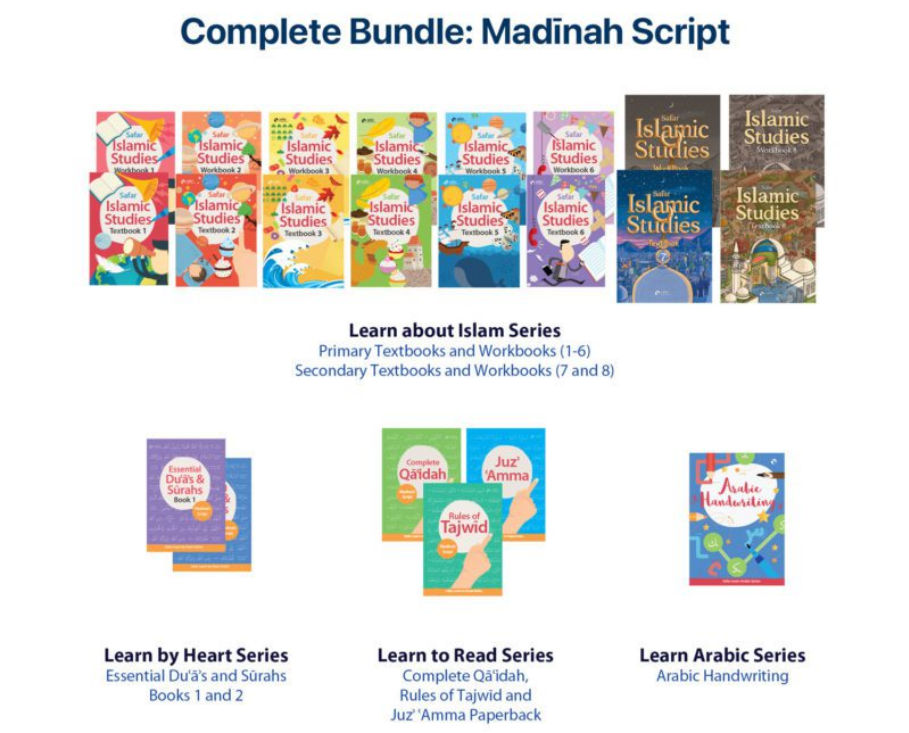
Safar Publications
Safar has built a comprehensive curriculum around three integrated series: Learn to Read, Learn Islam, and Learn by Heart. Together they cover Quran literacy, Islamic studies, and memorization, developed using authentic scholarship alongside modern educational research.
What caught my eye is how flexibly it is designed. It serves full-time Islamic schools, weekend schools, maktabs, and homeschool families, which makes it worth a look whether you are teaching one child at your kitchen table or a whole classroom. If Quran literacy and a strong Islamic studies foundation are at the top of your list this year, this is a natural place to begin.
Best for: homeschool families and schools wanting a full Quran and Islamic studies foundation.
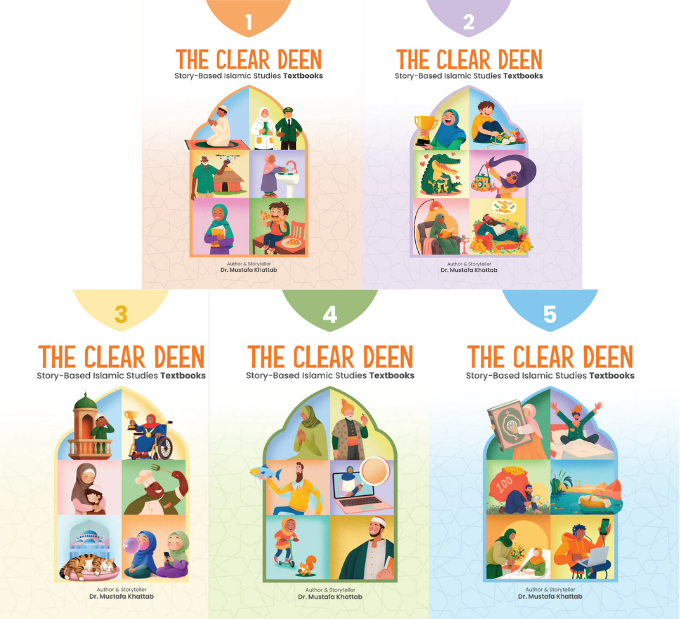
The Clear Deen
The Clear Deen is described as the world's first Islamic studies curriculum built entirely around storytelling. Instead of leaning on memorization alone, it teaches through stories, illustrations, workbooks, and activities, covering seerah, Quranic vocabulary, fiqh, tafsir, aqeedah, akhlaq, leadership, and Islamic history.
If you have a child who lights up at a good story and glazes over at a worksheet, this approach is worth exploring. It is designed for full-time schools, weekend schools, and homeschool programs, and it blends authentic scholarship with modern teaching strategies.
Best for: story-loving learners and parents who want deen to feel alive, not dry.
FAITH Publications
FAITH Publications presented a comprehensive High School Islamic Studies curriculum covering aqeedah, fiqh, and Islamic studies. Alongside the student textbooks is an online Teacher Resource Portal with lesson plans, classroom activities, and assessments.
Rather than emphasizing memorization alone, the curriculum focuses on helping students develop a meaningful relationship with Allah while equipping them to navigate contemporary challenges through authentic Islamic knowledge. If you are teaching at the high school level and want structure with the teaching support built in, this is worth a closer look.
Best for: high schoolers and parents who want a structured program with real teacher support.
Yaqeen Institute
Yaqeen Institute shared its growing collection of free thematic Islamic studies units for middle and high school educators, with a K to 12 curriculum project on the way. The units emphasize inquiry, critical thinking, and faith development, and they come with lesson plans and classroom resources.
Two things make this one worth bookmarking. First, it is free, which matters when you are building a shelf on a budget. Second, it is designed to help older students think deeply and hold onto their faith with confidence, which is exactly the work of these years.
Best for: older students, and any family wanting a free, thoughtful place to start.
Noor Kids
Noor Kids introduced Akhlaq in Action, a story-based character education curriculum. It is designed to help children develop essential Islamic character traits, including honesty, courage, patience, responsibility, and compassion, through engaging lessons.
I can speak to this one from my own home. My son loves the Noor Kids books, and watching a child actually reach for a book about akhlaq on his own tells you everything about how well it is made. So much of tarbiyah is character before content. If you are less worried about facts memorized and more focused on the kind of human your child is becoming, this is a curriculum I feel comfortable pointing you toward.
Best for: families who want to put character and manners at the center of the year.
Health & Wellness from an Islamic Perspective
This is a six-level curriculum that helps educators teach health education through the guidance of the Quran and Sunnah. It covers physical health, puberty, mental wellness, relationships, identity, media use, nutrition, and emotional well-being, all while strengthening a child's faith and Islamic identity. It comes with student books, teacher manuals, and video lessons.
Here is what I love about it. These are exactly the conversations we do not want handed to our children by the wider culture, and finally there is a curriculum that teaches them through our values. Having health, puberty, and identity covered from an Islamic lens, rather than having to filter and correct everything after the fact, is a real relief.
Best for: families who want health and life topics taught through an Islamic worldview.
Exploring Bioscience and Islam
This curriculum helps students thoughtfully explore the intersection of biology and Islamic theology, integrating scientific inquiry with revelation. It addresses important questions about the human being while strengthening a student's confidence in an Islamic worldview, and it is available free of charge with a dedicated online learning platform.
What I love here is the message underneath it. It teaches our children that you can be a scientist and remain fully, confidently Muslim. You do not have to drop your identity at the laboratory door or choose between faith and knowledge. For any child who is curious about the natural world, that reassurance is worth its weight in gold.
Best for: science-curious older students, and any parent who wants faith and knowledge to sit together.
AI RoboVision by Usmani Academy
AI RoboVision is a complete K to 12 STEAM curriculum that introduces students to artificial intelligence, robotics, IoT, 3D design, and immersive technologies through an Islamic ethical framework rooted in niyyah, amanah, and khalifah fil-ard. It provides ready-to-teach lesson plans and hands-on learning experiences.
The future our children are growing into is an AI-driven one, whether we feel ready for it or not. A program that prepares them for that world while keeping Islamic values at the center, rather than treating technology and deen as separate lanes, is a thoughtful thing to have on your radar.
Best for: families who want their children ready for a tech-driven future without leaving their values behind.
BEAM Venture Entrepreneurship & Leadership Curriculum
BEAM Venture offers an experiential entrepreneurship and leadership curriculum for Grades 6 to 12, grounded in both Lean Startup methodology and an Islamic worldview. Students build entrepreneurial thinking, leadership, financial literacy, innovation, and real-world problem-solving skills, with teacher training and mentorship built in.
What I love about this one is the hands-on part. So often our children learn the theory and never get to apply it. They can explain a concept but have never actually built anything with it. A curriculum that makes them do the work, not just study it, is exactly the kind of learning that sticks. This one is for the older kids ready to build and lead.
Best for: middle and high schoolers who learn by doing, not just reading.
Muslim Kids TV: Time Hoppers
Inspired by the animated film Time Hoppers: The Silk Road, this classroom resource introduces students to influential Muslim innovators, including Al-Khwarizmi, Ibn al-Haytham, Mansa Musa, and Maryam al-Asturlabi, through printable workbooks, classroom posters, colouring books, and a classroom film licence.
Our children deserve to grow up knowing that the giants of science, mathematics, and exploration included people who looked like them and prayed like them. A resource that brings that history to life through story and film is a beautiful way to build both knowledge and pride.
Best for: bringing Islamic history and Muslim innovators to life for younger and middle-grade kids.
A few more worth exploring
The list did not stop there, and a handful of additional resources are worth a mention as you plan.
CISE, Jerusalem and al-Aqsa: Mirror to the World is a completely free curriculum for Grades 6 to 12, including student textbooks, teacher guides, and an interactive online course. For teaching our children about a place that holds so much of our history and heart, a free and well-built resource is a gift.
Ihsan Education, Reclaiming Quranic Joy offers a heart-centered approach to the Quran, rooted in tazkiyah and tadabbur. It is an invitation to return to the Quran not as a text to be studied, but as a living source of mercy, healing, and joy. Beautiful for students, parents, and lifelong learners alike.
Swords & Butterflies offers early-years Islamic literacy, including phonics primers, early readers, and copybooks rooted in tafsir, adab, and seerah. If you have the littlest learners just beginning to read, this is worth a look.
There were others too, including a Teaching Palestine toolkit and resources on the Islamic philosophy of education, all pointing to how much good work is being done in this space right now.
Where to go from here
Here is my gentle suggestion. Do not try to choose everything today. Pick the one area that matters most to you this year, whether that is Quran, character, science, or confidence for an older child, and start there. A shelf is built one good book, one good program, at a time.
If you explore any of these, I would truly love to hear how they worked for your family. Come back and tell me. Your experience becomes the next mother's shortlist.
Rooted in faith. Growing in knowledge.
Reference: ISLA Curriculum Palooza 2026